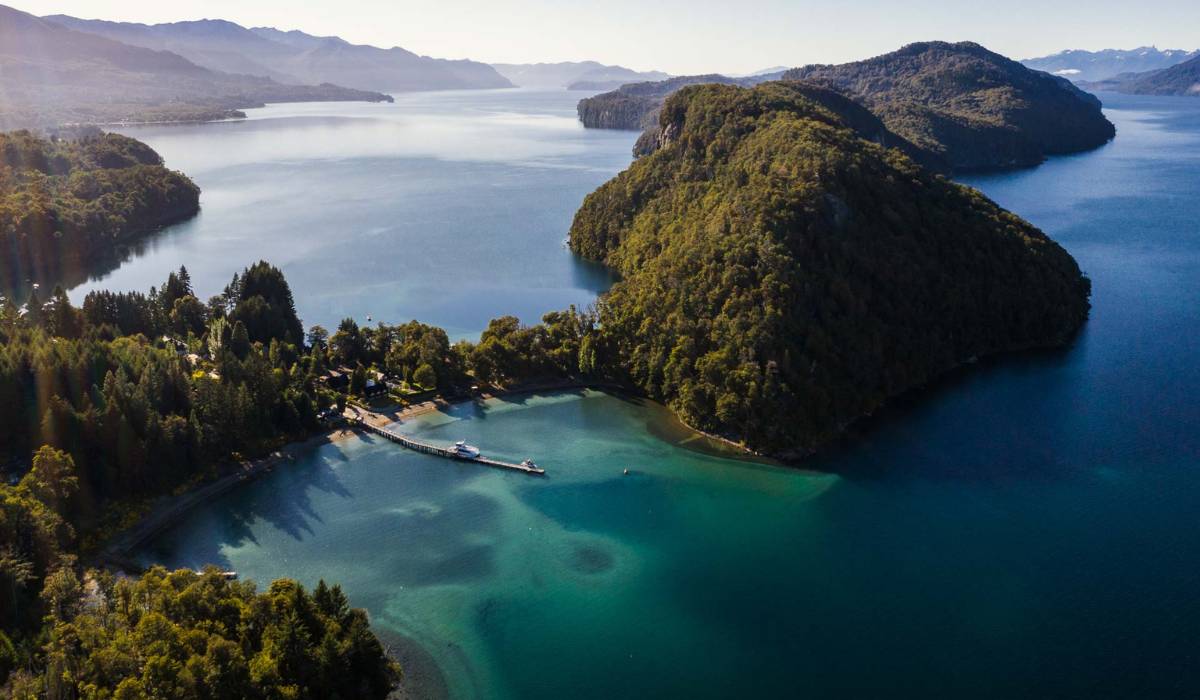
The Route of the 7 Lakes is magical all year long. Dare to connect Bariloche with San Martín de los Andes through one of the most beautiful roads in Argentina.
Sometimes, driving along the roads of Argentina becomes an unforgettable experience. You never know when you will come across breathtaking scenery. In Patagonia there is a road that seems to only connect two cities, but turns out to be so much more. You will get in the car and travel through mountains, lakes and forests. The Route of the 7 Lakes awaits you, a stretch of the legendary National Route 40.
The best way to do the Seven Lakes is by departing from Bariloche or San Martín de los Andes. In both cities you can rent a car with Rentennials and start your journey along this beautiful road. On your own schedule, your own way and without any rush.
In this article we share the best tips to explore at your own pace and embark on the adventure.
What is the Route of the 7 Lakes
The cities of Bariloche and San Martín de los Andes are connected through the mythical National Route 40. It is 190 km, but it is not until Villa La Angostura that the Route of the Seven Lakes begins, the famous 110 km stretch that passes through places that will be forever etched in your memory.
The route can be done in one day, but the best way is to take it slowly, contemplating and enjoying the scenery. There are seven lakes: Correntoso, Espejo, Escondido, Villarino, Falkner, Machónico and Lácar. In addition, there are some alternative roads that lead to other places.
There are trails for walking, campsites to get closer to nature and wake up on the shores of a lake, trekking routes to climb a mountain, beaches to relax, and much more.
How to Do the Route of the 7 Lakes
The first thing is to rent a car in Bariloche or in San Martín de los Andes. If you start in the city of Rio Negro, you can spend a few days exploring the must-see spots near Bariloche and, then, begin the adventure.
There are several ways to thoroughly explore this stretch of Route 40:
- Go and return in a day from Bariloche or San Martín de los Andes. Although there is sometimes not enough time, we recommend taking this route calmly and at a leisurely pace. Every place is incredible and it is worth going slowly.
- Drive to Villa la Angostura and stay for a few days. There, you can use it as a base to go back and forth to the lakes. This way, you will spend more time at each place.
- Base yourself in San Martín de los Andes, and explore each spot from this city.
- The best option is to set out from Villa La Angostura and stop at some strategic points along the way. If you enjoy camping, there are several options to pitch a tent. Also, along the road there are cabins and guesthouses.
Places to Visit on the Route of the 7 Lakes
There are many places to stop and enjoy along the way. Below we leave you all the information with the best stops on the Seven Lakes Route departing from Bariloche.
Villa La Angostura
This town in Patagonia is one of the most popular places to use as a base and explore the 7 Lakes circuit. It is worth staying a few days because it is a place that overflows with beauty and tranquility. It also offers a wide range of cabins, hotels and restaurants.
The Villa is on the shores of Lake Nahuel Huapi, surrounded by the Inacayal, Bayo and Belvedere hills, which makes its surroundings beautiful. In winter, Cerro Bayo has a ski slope for snow sports. During the summer, there are some circuits to explore, such as the Cerro Bayo circuit and the Río Bonito waterfall.
In Villa La Angostura there is the pedestrian entrance to Los Arrayanes National Park. It is a 12 km trail that takes you to the southern tip of the Park where the arrayán forest is present everywhere. The trail can be done on foot or by bicycle rented beforehand in the town. To purchase your Park entry ticket, click here.
Correntoso Lake and River
Coming from the south, it is the first on the circuit. It is one of the largest lakes, with beaches and bays. There is an old wooden bridge from which you can observe the Correntoso River, one of the shortest in the world. In the area there are campsites to spend the night.
Mirror Lake
Continuing a few kilometers along RN 40, a gravel road leads you to this lake. It is an ideal place to spend some time, with a picnic area and beautiful beaches.
Further ahead, you will find Bahía del Guardaparque. It is a bay with cauquenes, lapwings and a distinctive landscape. From here, a small trail leads to one of the beaches of Lake Correntoso.
Lago Espejo Chico
Although it is not part of the Route of the Seven Lakes, it is very easy to access. Once you have passed Lago Correntoso, there is a 2 km gravel road to get there. There is a campsite to spend the night.
Villa Traful and its lake.
Turning off a few kilometers along Provincial Route 65, you reach this mountain village located within Nahuel Huapi National Park. On the shores of Lake Traful, the town conveys peace and nature. If you want to rest, or choose a place to use as a base, this is your place. To find accommodations, visit this link.
There are trails of varying difficulty levels leading to waterfalls, hills, and virgin forests. The recommended ones are the trail to the Coa Co and Arroyo Blanco waterfalls, and the trail to Cerro Negro. It is important that you register with the Park Ranger before setting out on the hike. In general, these are self-guided trails, although there are some where it is necessary to go accompanied by a guide.
In addition, the area offers horseback riding and water sports on the lake, including the incredible dive into the submerged forest.
Hidden Lake and Ñivinco Waterfall
Continuing north along RN 40, you will find this lake. There is a viewpoint to contemplate this beautiful mirror of water. A little further ahead, you reach Pichi Traful, one of the arms of Lake Traful. Taking a small detour, there is a campsite without services.
A little further north, one of the must-sees of the Route of the Seven Lakes is located: the Ñivinco waterfall, one of the most beautiful in Patagonia. You must walk along a short trail of moderate difficulty to reach the waterfall.
Lake Villarino and Lake Falkner
These two lakes are located just one kilometer apart from each other. Lake Villarino has a free camping area and the Hostería Villarina.
At Lake Falkner, the beaches are ideal for relaxing and enjoying the water. There is a campsite with services for spending a few nights in nature. Additionally, from here a high-difficulty trail leads to Cerro Falkner. It takes between 4 and 5 hours, so you need to be well prepared. Before heading up, it is necessary to register for the trek.
Lago Hermoso and Lago Machónico
This is already the last stretch of the Seven Lakes Route. These two lakes mark the boundary of Huapi National Park and the beginning of Lanín National Park. Lago Hermoso is accessed via a small gravel road. It is ideal for spending the night. There is a campsite and, further ahead, the Hermoso Eco Lodge.
Continuing along Route 40, there is Lago Machónico, which can only be enjoyed from the viewpoint. Further ahead, at the junction with the Hermoso River, there is a wide range of accommodation.
Villa and Lake Maliquina
Towards the end of the route there is a small detour of about 15 kilometers along RP 63. It leads to a small town on the lakeshore of great beauty where tranquility has completely taken over the surroundings.
There are many activities to do, such as visiting the Caleufó pools or continuing along RP 63 to Lake Filo Hua Hum. If you would like to spend a few days surrounded by a beautiful landscape, book a few nights at one of the cabins. At this link you can find some accommodation options.
Lake Lácar and San Martín de los Andes
Already at the end (or beginning) of the route lies this lake that bathes the shores of one of the most beautiful cities in Patagonia. There are many activities, from hiking trails, horseback riding, water sports and, if you go in winter, skiing.
Smaller than Bariloche and with its essence intact, San Martín de los Andes is an excellent place to stay for a few days and begin the journey along the Route of the 7 Lakes.
Camping spots on the Route of the 7 Lakes
Here are some campgrounds along the Route of the 7 Lakes. Keep in mind that in many areas there is no cell service or Wi-Fi.
- Camping Rosenda Comunidad Mapuche. On Nahuel Huapi, very close to Correntoso Lake. Tel: 02944579543
- Camping La Bellunesse. Between Correntoso Lake and Espejo Lake. Tel: 54294 4238762
- Camping Lago Espejo Chico. Has a convenience store and restaurant.
- Camping 7 Lagos. Located on the northern arm of Lake Traful.
- Camping Nuevo Falkner.
In summer, it is best to arrive early or after midday to secure a spot.
How Many Days Are Needed to Explore the Route of the Seven La
On an express trip, in one or two days you can cover the best of the Route of the Seven Lakes. However, it is worth taking at least a week to enjoy each lake, waterfall or trail. You can sleep along the way in a cabin, inn or campsite.
The best time to travel to Patagonia
During winter you may not be able to do many trails. Also, snow can become a problem when driving.
The best time of year to do this route is from October to April. In January, you will likely encounter many people, so it is necessary to book your accommodation in advance (or arrive early at the campsite).
Rent your car with Rentennials
Traveling through Patagonia by car is a one-of-a-kind experience. Few roads will surprise you like this one. That's why renting a car with Rentennials will make your trip so much easier: fast, affordable, and safe. Enjoy every kilometer on one of the most beautiful routes in the country.
Dare to discover Patagonia your way!