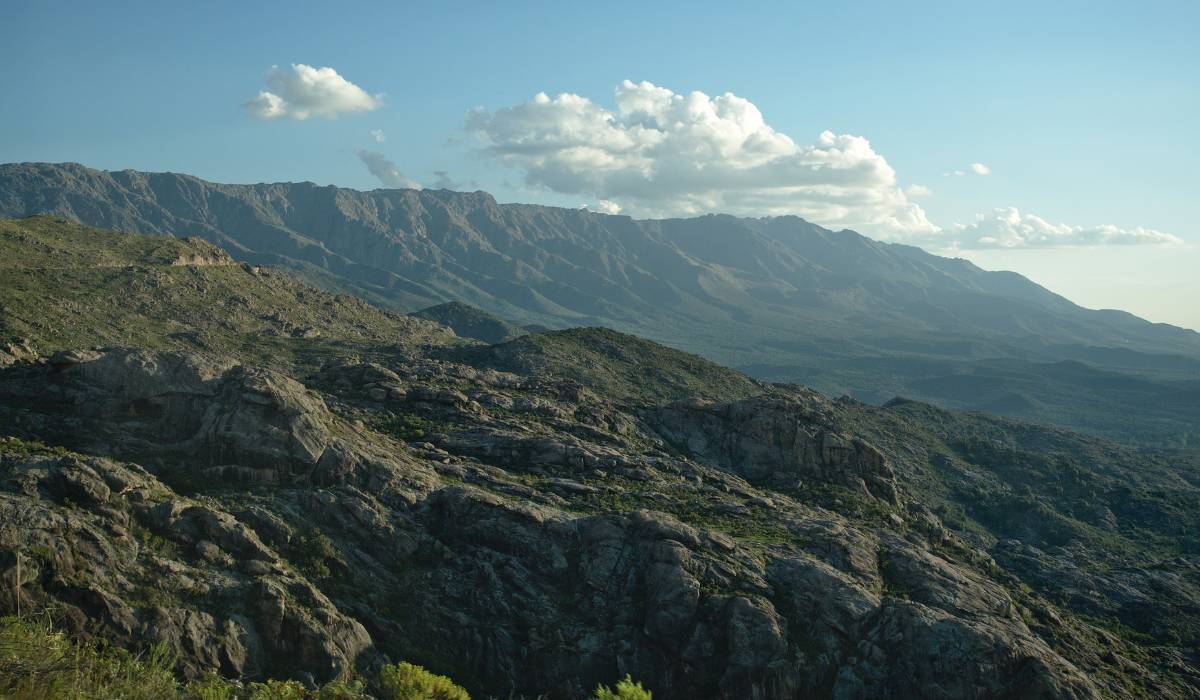
The province of Córdoba is a world waiting to be discovered, and Traslasierra has everything you need for an unforgettable vacation.
Talampaya National Park and Ischigualasto Provincial Park are two of the most stunning destinations in Argentina. You'll find towering canyons, geological formations that look like moonscapes, and colors that change within just a few kilometers. Both parks, located in La Rioja and San Juan, invite you to discover the history of our land.
Visiting them is easy and can be done in just a few days if you have a car. But the best approach is to take your time and explore every place waiting to be discovered. Sometimes, with just two or three extra days on your trip, you get to experience places that surprise you far more than you originally planned.
At Rentennials we want a getaway through Córdoba to become an unforgettable experience. That's why we're bringing you this guide with the best information for exploring Traslasierra.
Where is the Traslasierra Valley in Córdoba
The tourist regions of the province of Córdoba number ten. Some of the best known are:
- The Punilla Valley is north of the capital. It stretches from Carlos Paz to La Cumbre along RN 38.
- The least explored is Northern Córdoba. It begins along RN 9, in Deán Funes. It crosses the royal road and one of the most beautiful villages in the world: Villa Tulumba.
- The Calamuchita Valley. Accessible via RN 5, it is home to Los Molinos, the Embalse Río Tercero reservoir, and other spots to enjoy a variety of activities.
- The Traslasierra Valley. From Mina Clavero to the border with San Luis along Provincial Route 14. You will discover villages and a unique mountain landscape.
You can find more information on the official tourism website of the Province of Córdoba.
How to Get to Traslasierra by Car
There are several options to get to Traslasierra from the city of Córdoba. The first is to head south on Provincial Route 34 toward Alta Gracia. After passing Falda del Cañete, turn right toward Las Jarillas. Continuing along the same route, you cross the Las Altas Cumbres road, with a stunning scenic landscape. Finally, you reach the first city of Traslasierra: Mina Clavero. Here we leave you the map with the suggested route.
Another option is to go at a slower pace and make a short stop in Alta Gracia. Taking National Route 36 from Córdoba heading south, you reach Alta Gracia after traveling 50 km. From here, continue along RP 34 to the intersection with the Las Altas Cumbres road. This alternative is a little longer, but you get to know one of the most iconic cities in the province: Alta Gracia.
Must-see places on a road trip through Córdoba
On your journey to Traslasierra from the city of Córdoba, you will discover unforgettable landscapes, a National Park and a historic city that you simply cannot miss.
Below, we tell you about the must-see stops to make on your route to Traslasierra.
Alta Gracia, a place with history
The history of the city of Alta Gracia begins around the 17th century. The Jesuit missions made their presence felt and shaped the identity of this town. Later, in the 20th century, it was one of the places chosen by the family of Ernesto "Che" Guevara to live.
All of this can be discovered at two must-see places that every traveler should visit:
- Museo Estancia Jesuítica de Alta Gracia y Casa del Virrey Liniers. This is an estate organized by the Jesuits since 1643. You can visit the church and the residence. Admission is free.
- The Museo Casa del Che. For health reasons, Ernesto Guevara's family decided to live in this city. Today, it is a house museum that covers the entire life of the revolutionary leader. Admission is paid and it is open every day from 9 am to 7 pm.
You can also visit the oldest dam in Córdoba, built by the Jesuits: El Tajamar. And don't miss a walk through the Parque del Sierras Hotel.
Alta Gracia has a wide range of hotels in different categories. Discover the best places to stay!
Road of the High Peaks
Provincial Route 34 crosses the Cumbres de Achala, the highest mountain range in the province. It is the road known as Las Altas Cumbres, and one that every traveler should drive at least once during their visit to Córdoba. It is also one of the most emblematic Scenic Routes in the province.
Throughout the route you will find several viewpoints to capture the most beautiful panoramic views in the province. There are restaurants and diners where you can stop if needed.
Quebrada del Batán Overlook
After traveling a few kilometers through Las Altas Cumbres, there is a path 130 meters from RP 34 that leads to the Quebrada del Batán viewpoint. From here, you can take in a complete scene of the province: Carlos Paz, the San Roque dam, and the capital.
If you're lucky, you can spot Andean condors, Argentina's emblematic bird.
A recommendation: hire licensed guides because there is no signage. You will also reach the Cascada Escondida, where you can practice rappelling.
Quebrada del Condorito National Park
Córdoba has a National Park that is not so well known. It takes some time, but the trip is worth it to be able to observe these magnificent birds. From La Pampilla, at approximately kilometer 59.5 of RP 34, you will reach the visitor center. From here, the route begins toward the Quebrada del Río de los Condoritos and the viewpoints for birdwatching.
Another alternative is to do the more frequently visited Balcón Norte. It is a 4-hour round-trip hike with moderate difficulty.
To Mina Clavero via RP 14
To get to Mina Clavero there is an alternative for adventurers. A 28 km gravel road along RP 14. Throughout the route, San Gabriel Brochero, the Argentine saint, is remembered.
The Traslasierra Valley in Córdoba, a destination to rest
The villages of Traslasierra are synonymous with rest and nature. They are ideal for those who seek to disconnect in accommodation with views of the sierras, while also wanting to go hiking, trekking and enjoy the streams.
The first thing you need to do on your trip to Traslasierra is choose the village where you will stay. That is why we leave you here some suggestions to help you organize your travel itinerary in the province of Córdoba.
Which towns are in Traslasierra
From Villa Cura Brochero and Mina Clavero heading south, there are many towns where you can spend a few nights in complete peace. Nono, Villa Las Rosas, San Javier and Yacanto are just a few options. There is accommodation for all budgets and styles.
RP 14 is the backbone of the entire route. The best way to make a decision is to choose the town that best suits your needs.
Villa Cura Brochero
This town pays tribute to the first Argentine saint, San Gabriel Brochero, who lived in the area. It has numerous attractions, such as Centenario square with a monument to the saint, while the church of Nuestra Señora del Tránsito and the Brocheriano Museum house the remains of the priest. It is worth exploring this museum, open every day from 10 to 13:45 and from 18:30 to 21:30.
If you are looking for nature, the trail to La Gloria waterfall is the best option. Nearly 15 km long, it starts at Centenario square and winds through beautiful mountain scenery to one of the most well-known waterfalls in Traslasierra.
Mina Clavero
Mina Clavero is the most visited destination in Traslasierra. It has three main rivers and numerous streams to enjoy the freshness of their waters. The Mina Clavero river is the most renowned and has several bathing spots along its course: La Toma, Nido de Águila and La Residencia. Beaches, natural pools and natural water slides are just some of its attractions. Its beauty led it to be declared one of the "7 natural wonders of Argentina".
The Panaholma river has the Los Cedros bathing area. It is more family-friendly due to its calm waters and shallow depths. Finally, the Los Sauces river features gorges and deep pools.
In the town there are accommodations for every budget. If you go in summer, the ideal is to book well in advance. This way, you guarantee yourself more affordable prices and the best spots.
Ninth
Its adobe constructions already tell us that we are in a town with a great history. Here there are two rivers that cross the area: Los Sauces and the Chico river. There is a place where both waterways meet, transforming the landscape into something unique.
The Las Tropas and Los Remansos bathing spots are the best known in the area, ideal for enjoying the day. For those who prefer activities in full contact with nature, there are trails, cycle tourism and horseback riding. For more information, visit the official Nono tourism website.
If you are looking for a quieter place, Nono is a good option.
Villa de las Rosas and Los Molles
Another town in Traslasierra full of rivers and streams. A few kilometers away is the Dique La Viña, perfect for water activities. You can also explore trails with different difficulty levels. The most well-known are La Calandria, El Picahueso, and Los Jilgueros.
Very close by, there is the town of Los Molles, where the El Hueco Nature Reserve stands out. It is a forest home to the oldest and largest trees in Córdoba. Be warned, though—the difficulty level is high to reach this place. It is 24 km round trip.
San Javier and Yacanto
The calm and tranquility make these two towns the ideal destinations for rest and contact with what many seek: nature, disconnection, and the silence of the sierras.
Additionally, there is the possibility of trekking to ascend to Puesto Ferreyra. It is 4 hours, 12 km in total, and the difficulty is moderate. The area stands out for its offering of horseback riding and cycle tourism.
Here is something not so well known: there are wineries where you can taste the local wines:
Luyaba
One of the last towns in Traslasierra before reaching San Luis. Trails, horseback riding and regional products are what make this place special. It is known for being the paradise of aromatic herbs, as well as having its olive trail.
An ideal town to stay in full tranquility
La Paz
Its dirt streets, its houses and the calm transform this town into a unique place in Traslasierra. Almost on the border with San Luis, La Paz lives up to its name. Horseback riding, hiking, streams and bike rides are the must-dos. And always with the peace of the sierras.
One kilometer away is Loma Bola, a hill that has a small hamlet bearing its name. There is a famous hotel with a restaurant where it is worth stopping for lunch or spending the night.
The cabins and accommodations mostly offer beautiful views of the sierra.
Ascent to Champaquí Hill
Its 2790 meters make the hill one of the most popular adventures in the Traslasierra region. During the journey you will encounter high-altitude plains, rocks with unique shapes, ravines and streams. And when you reach the summit, the view will reward the effort made.
From San Javier, Villa Las Rosas and Los Molles there are access points to ascend Champaquí hill from Traslasierra.
The duration of the trek is between 8 and 10 hours. It is very important to go with local guides and register before heading up. It is an experience you need to be prepared for: bring water, trekking shoes and plenty of motivation to walk.
Contact the authorized providers to start planning the ascent.
Where to Sleep in Traslasierra
A long the towns of Traslasierra, there are accommodations of all types and for any budget. Campsites, boutique hotels, cabins and traditional hotels are present in every village.
If you're looking for a place with more restaurants and services, Mina Clavero is the right spot. If you prefer peace and quiet, Luyaba, San Javier or La Paz might be your place. Nono and Villa Las Rosas are towns with a bit more in terms of accommodations and dining.
Whether in summer or winter, call a few months ahead to make a reservation.
Rent a car with Rentennials to explore Córdoba
Traslasierra in Córdoba is that place you arrive at and never want to leave. Starting with the beautiful Altas Cumbres road, all the way to the border with San Luis, every village, stream and trail has a special magic. Throughout the year, it is ideal for a restorative break.
A car is the fastest and easiest way to explore each of these places in Córdoba. Renting one with Rentennials is the ideal option for those who prefer flexibility, low cost and reducing their environmental impact.