Traveling through Argentina is not only about discovering a destination, it is also about fully experiencing the culture, as happens every August 1st with the Day of the Pachamama in Jujuy. During this month, the north of our country prepares to be part of one of the most important moments for our indigenous communities: paying tribute to the Pachamama, the day of Mother Earth. Not by coincidence, the word comes from the Quechua language and means Pacha: «world» or «Earth», and mama: «mother».
This festivity is much more than celebrating what the earth gives us. It is immersing oneself in an age-old experience that holds deep meaning for Andean peoples. And understanding the beliefs of our communities helps us learn much more about the country, because traveling is more than visiting a place. Traveling is about getting closer and having authentic experiences that enrich us.
At Rentennials we strive to make your journeys through Argentina truly unique. So you can go and explore, but also take away new perspectives on our world. That is why we invite you to keep reading to learn what the Day of the Pachamama is and how to take part in one of the most fascinating rituals in Argentina.
Why is Pachamama Day celebrated?
The Day of Pachamama is a celebration to give thanks for what Mother Earth provides us. From everyday food and drinks, to the garments made from animal wool. It has been practiced for more than two thousand years and has its origins in the peoples of the Andes and Puna region, in what is today Peru, Argentina, Bolivia and Chile.
What is celebrated is a key moment in the agricultural calendar, where a new production cycle begins. In the height of the dry season, communities give thanks for what they were able to harvest in summer and offer Mother Earth food, drinks and meals. This moment is called "Feeding the Earth," also known as corpachada. It is a practice to renew the bond with nature. One must give thanks for what the Earth gives us, and pray for future harvests.
Furthermore, during this winter season all the necessary work is done to prepare the land for new sowing and harvesting. Fallow work is carried out (turning the soil), irrigation channels are cleaned and plants are pruned. This is done to leave the land ready and begin a new agricultural cycle.
When is Pachamama Day celebrated?
The Pachamama Day is on August 1st of each year. However, throughout the entire month you will be able to find different celebrations in the towns of northwestern Argentina.
What does Pachamama mean to Andean peoples?
Celebrating the Pachamama Day in Jujuy, or in the many places of our north, means spirituality and community. Furthermore, it is something that is passed down through generations who understand that the Earth is a living being, and as such, must be cared for.
The corpachada is a unique moment, but it is also part of the cultural identity of hundreds of families from Jujuy and northern Argentina, who prepare to perform the ritual and keep an ancestral legacy alive.
Giving thanks and sharing as an act of reciprocity is fundamental on this day.
How is Pachamama Day celebrated?
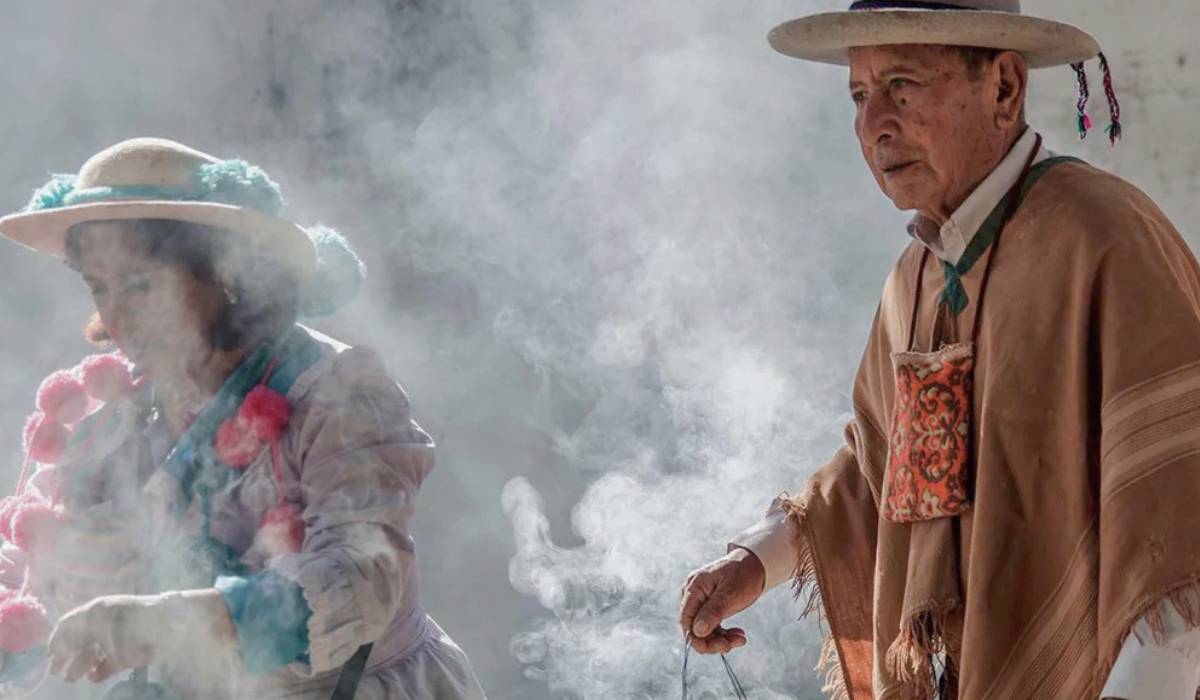
You've surely seen many images in which people dig a pit and begin to place food, drinks, coca leaves, among many other elements. Well, that pit has a meaning: it represents the mouth of the Pachamama.
People gather with their community, and also with tourists, and slowly deposit the food and drinks into this symbolic mouth. This is done with deep respect and in silence. Then, they cover the pit to strengthen the bond between nature and human beings.
It is important to note that these rituals are led by the eldest members of the communities, as a show of reaffirmation of the wisdom and experience of the elders.
What drink is consumed and offered to the Pachamama?
One of the drinks most consumed and offered to Mother Earth is chicha, a beverage crafted millennia ago by indigenous peoples. It is a fermented corn drink, one of the region's native crops.
Another traditional drink is caña con ruda, which may be somewhat better known throughout the rest of the country. These drinks, along with food, are part of the ritual of "feeding the Earth." It is not just about drinking, but also about sharing with others as a fundamental expression of gratitude and reciprocity.
What foods are offered to Mother Earth?
Many foods can be given, but they are generally those produced in the Andean region. For example, potatoes, corn, quinoa, or various meats. What is the idea? To offer the Earth what it provides us and return it to say "thank you." In addition, coca leaves and cigarettes are usually left in the open pit.
Jujuy: National Capital of Pachamama
Jujuy is officially recognized as the National Capital of Pachamama. In fact, a law was passed to recognize this province's connection with Mother Earth and with the aim of respecting traditions and giving greater visibility to this celebration.
So, if you want to be part of this experience, we recommend traveling and experiencing Pachamama Day in Jujuy.
Where is Pachamama Day celebrated in Jujuy?
The Pachamama Day in Jujuy is celebrated in many localities, but mainly in those located in the Quebrada de Humahuaca and in the Puna. We always recommend checking beforehand on the Jujuy Tourism social media to find out exactly where and when.
Here we share the three best places to experience this special day.
Valle Grande
On August 1st of each year, the town of Valle Grande gathers to celebrate one of the most special days. It is a celebration with a special connection, where each person participates with respect and emotion. Throughout the day, there is also a craft fair and Andean music.
Getting to Valle Grande is not easy, as it lies outside the classic Quebrada circuit. However, the road is truly beautiful and worth every moment. Best of all, you can ascend from the Jujuy yungas, through Calilegua National Park, until you reach stunning mountain landscapes.
You can go by regular car, but keep in mind that the road is gravel, mountainous, and requires slow driving (avoid this road in summer, which is rainy season). In addition, the town's relative remoteness and somewhat more challenging access make the ceremony much more authentic than in other places in the Quebrada.
Here we leave you the map to get from San Salvador de Jujuy to Valle Grande.
Tumbaya
In the Quebrada de Humahuaca lies the small village of Tumbaya, one of the most peaceful places in the area. As in every village, a ceremony is held here with coca leaves, cigarettes, traditional foods and drinks that are offered to Mother Earth. At the same time, you will be able to hear the coplas that accompany the ritual.
Tumbaya is only 50 km from San Salvador de Jujuy via RN9.
Purmamarca
It may be the most touristy place to experience this event, but that doesn't make it any less authentic. The town's residents gather at the main square of Purmamarca for the traditional ceremony in which food and drinks are offered to Mother Earth.
While the crowds can sometimes be an issue, Purmamarca's tourist services guarantee a great stay. Plus, there are many more activities to do in the village or very nearby.
From San Salvador de Jujuy to Purmamarca is only 70 km via RN 9.
Recommendations for experiencing Pachamama Day in Jujuy
As travelers we can sometimes feel a certain discomfort about participating in ceremonies of which we are not part of the community. However, we can always approach things differently to live these authentic experiences, especially if we prepare specifically for Pachamama Day in Jujuy.
Here are some recommendations so you can have a complete experience:
- Respect the rituals by participating respectfully, listening and following the guidelines of the community you visit.
- Bring an offering: communities appreciate it and want you to truly experience this day. Perhaps coca leaves, wine, some food or something symbolic as a token of gratitude.
- Dress comfortably and warmly. Keep in mind that it is winter and the north tends to be cold. Also, the ceremonies are held outdoors and at altitude.
- Try the local food at the fairs held in the villages. For example, locro, tamales and empanadas.
- Experience it from early on: the corpachada usually begins in the morning, with music and coplas.
- Watch out for altitude: while you will be at an average of about 2500 meters above sea level, give yourself at least one day to acclimatize by doing light activities.
Where to sleep in Jujuy
The province of Jujuy has accommodation options for every budget. From small boutique hotels to cabins with mountain views.
The first thing you'll need to do is choose which town you want to experience August 1st in. Once you decide this, we recommend booking your preferred accommodation in advance.
A tip: Purmamarca is the best place to stay overnight, but keep in mind that there will be more people than usual.
How to Get to Jujuy
To get to Jujuy the best option is to take a flight to the airport of San Salvador de Jujuy or Salta. Aerolíneas Argentinas, JetSmart and Flybondi are the airlines that have daily flights to both cities.
From there, only a few kilometers separate you from the villages of the Quebrada de Humahuaca.
The best option: renting a car in Jujuy or Salta
The ideal option to get around the villages of the Quebrada is renting a car in Jujuy or Salta. From there you will not only be able to be part of the Día de la Pachamama in Jujuy, but also explore the Quebrada de Humahuaca at your own pace and visit the places you love the most.
What is the climate like in Jujuy in winter?
We dedicate a special section to clear up any doubts about the weather. Jujuy in winter is cold, but with temperatures that are not very low during the day. The nights are cold, but this is due to the altitude. Bring enough warm clothing and don't worry, the sun is always there.
Rent your car with Rentennials and experience Pachamama Day in Jujuy
Traveling through Argentina is a box of surprises. Maybe you didn't know about it and you arrive on August 1st at the Quebrada de Humahuaca and find yourself in the middle of an unforgettable ceremony. Or you plan ahead specifically to attend a festival thousands of years old and discover a whole new way of seeing things.
Being part of Pachamama Day in Jujuy is for travelers who are always looking for something more. That's why renting a car with Rentennials is the gateway to a different dimension of our country: a unique and unforgettable event.