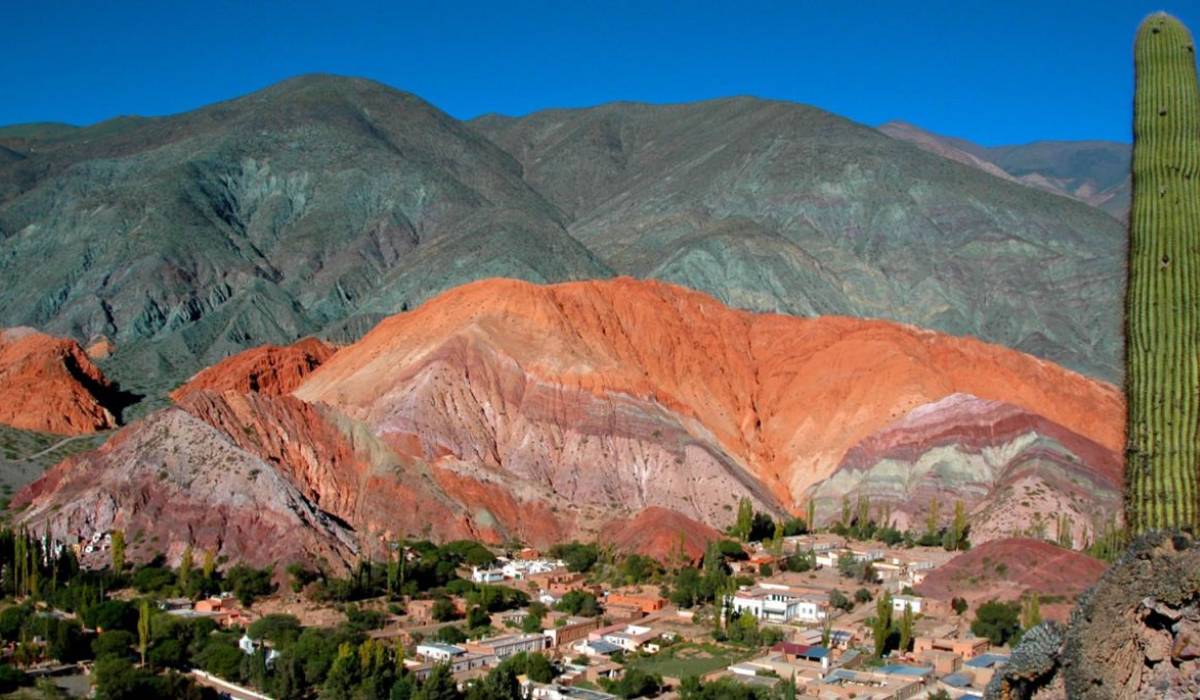
A road trip through the Quebrada de Humahuaca: colors, stories and flavors of the north
In Jujuy you'll find one of the most spectacular landscapes in Argentina. Salt flats, colorful hills and a culture that dazzles.
Looking for a different kind of trip? The Quebrada de Humahuaca is one of those destinations that combines history, landscapes and a cultural identity that make for a complete experience. Start in Salta or Jujuy, continue through Purmamarca and ascend to the Salinas Grandes at nearly 3500 meters above sea level. Carry on to Tilcara, Humahuaca and the incredible Hornocal mountain range.
The best part is that everything is very close and easily accessible. On a route of about 200 kilometers in total, you'll discover one of the most beautiful corners of Argentina. There are also different types of accommodations and gastronomic experiences to savor local dishes.
Rentennials lets you travel with freedom. Start by renting a car in Jujuy or Salta and set out on the roads of northwestern Argentina. So you don't miss a thing, here we tell you the best things to do in the Quebrada de Humahuaca.
Where is and what is the Quebrada de Humahuaca
In the northeast of Argentina, in the province of Jujuy, lies the Quebrada de Humahuaca, a stunning valley that opens up as the Grande de Jujuy river flows through it. It spans about 155 kilometers where you will always be surrounded by the mountains of the Andes. The landscapes are arid, colorful, and gradually ascend until reaching the Puna, the famous high plateau. At the same time, there are many small valleys that connect with one another.
The color palettes of the quebrada are unique in the world. Reddish, ochre, purple, green, and many more tones can be appreciated in its hills and mountains.
These landscapes are shaped by the passage of history. The indigenous peoples, the Incas, the Spanish, and later the struggle during the wars of independence make these lands an ideal place to better understand the history of Argentina. For this reason, the Quebrada de Humahuaca is also a site of great cultural and historical value, declared a UNESCO World Heritage Site in 2003.
A road trip through the Quebrada de Humahuaca
Renting a car in Salta or Jujuy is the first step to truly get to know these beautiful places that the north of the country has to offer you. You can fly to the Salta or Jujuy airport and, from there, set off along National Route 9 to Purmamarca, the ideal town to use as a base and explore the gorge.
From Salta to Purmamarca by Car
From the city of Salta, getting to Purmamarca, the most picturesque village in the Quebrada de Humahuaca, is very simple. The fastest route is to take National Route 9, then National Route 34, pass through the city of San Salvador de Jujuy, and finally begin to enter the gorge. Along these routes it is 188 km. Here you can find the suggested route.
If you enjoy mountain roads, there is a more than interesting alternative: the old National Route 9. To take this route you don't need to turn off this road and just continue straight. It is shorter (157 km), but the road is winding and, at the same time, beautiful. Here you will find the route to drive by car.
From Jujuy to Purmamarca by car
From the city of San Salvador de Jujuy to Purmamarca it is only 65 km along National Route 9.
If you like greenery and a different landscape, we recommend stopping for a few hours, or why not a few days, in the yungas of Jujuy.
Termas de Reyes and the Jujuy yungas
When we think of Jujuy, the image of mountains covered by lush green vegetation rarely comes to mind. Just a few kilometers from the capital, you'll find Termas de Reyes, a thermal complex with a hotel nestled in a spectacular landscape.
A little further along is Potrero de Yala Provincial Park, a great destination to enjoy nature and birdwatching.
Getting to both places is absolutely worth it. Provincial Route 4, the access road, is one of those routes that will leave you "speechless".
What to Visit in the Quebrada de Humahuaca
The classic route includes all the must-see places in the Quebrada de Humahuaca. Some are more crowded than others, like the famous Cerro de los Siete Colores, or you can choose hidden gems that are not yet so visited, such as the Quebrada de Las Señoritas in the village of Uquía.
Below, we tell you which are the best places you cannot miss.
Purmamarca
Perhaps one of the most beautiful villages in the world? You'll find out the answer when you decide to visit Purmamarca. Founded by the Spanish in the late 16th century, its dirt streets, adobe houses and market are a journey through time, all framed by the stunning Hill of Seven Colors. It is an excellent option if you want to spend a few days in a place that breathes tranquility..
From the town center, the Los Colorados trail begins. It is a one-hour walk of very low difficulty. In addition, by hiring a licensed guide, you can walk along the Viltipoco trails, a path that leads to a natural cave.
Of course, don't miss the historic Santa Rosa de Lima Church, built in 1778, the town hall and the craft shops featuring goods made by local producers.
Tilcara
Tilcara is a historic city in Argentina. Without a clear founding date, it is a place that combines culture, history and nature. It offers a wide range of dining and accommodation options. It is another option for lodging and tends to be more affordable than Purmamarca.
The Pucará de Tilcara is one of the must-see attractions in the city. It is an archaeological site ideal for learning about the pre-Hispanic history of the region. The best way to explore it is through guided tours. It is open every day from 09:00 to 18:30, except Mondays, when it remains closed.
Another recommended excursion is visiting the Cueva del Wayra and the Garganta del Diablo waterfall. It can be done independently, although with a local guide the experience can be even better.
Tilcara is located 25 km north of Purmamarca along National Route 9.
Humahuaca and the Hornocal
Humahuaca is the most important city in the gorge. Its commercial and economic activity makes it different from Tilcara and Purmamarca, so if you prefer peace and quiet, it is not the ideal city to stay in. However, there are a large number of hotels and restaurants that can make your trip more budget-friendly.
Starting from here, you can reach the impressive Serranía del Hornocal, located 27 km away via RP 73. The best time to visit the viewpoint is in the afternoon to enjoy the striking colors across the mountain. Be careful: the road climbs to about 4,500 meters above sea level, so take it slow and don't rush.
In the city, you can visit the Monument to the Heroes of Independence, on the hill of Santa Bárbara, facing the main square and the Cabildo de Humahuaca. There are also several museums you can visit.
Humahuaca is 45 km from Tilcara via National Route 9.
Discover the villages of Uquía and Maimará
There are some lesser-known villages in the Quebrada de Humahuaca that are ideal for exploring for a few hours.
Uquía, 58 km north of Purmamarca, is recognized for its streets and historic buildings. The most famous are the paintings of the harquebusier angels in the Church of San Francisco de Padua, dating back to the 17th century. A must-see is the trail to the Quebrada de las Señoritas. It is a low-difficulty hike to enjoy some very unique geological formations.
Just 20 km from Purmamarca, the village of Maimará is distinguished by its color palette on the hill known as the Painter's Palette. Once again, the hills display a surprising variety of tones. Getting there is very easy: with a 3-hour walk to a viewpoint.
In both villages there are simple and affordable accommodations, ideal if you are looking to cut costs on your trip.
Iruya, a hidden village in Salta
It's curious, but a town in Salta appears on this route. This is because Iruya is located very close to the border with Jujuy, even though it belongs to the neighboring province. Famous for its church, its architecture, and for being nestled among the hills, the magic of the town is best appreciated from the viewpoint, where everything finally makes sense: the canyon walls, the rivers, and a small village in an unexpected place.
From Iruya, there are several trekking routes to explore, such as the one leading to the village of San Isidro (8 km one way and the same back). Another option is a moderate-difficulty trail up to the Condor viewpoint.
Spending a night in Iruya is well worth it. That said, the accommodations are simple, but very comfortable.
How to Get to Iruya from Humahuaca
The particularity of Iruya is that it can only be accessed from Humahuaca. Traveling 26 kilometers north of the city, you need to take Provincial Route 13 and continue along a dirt road. You have to go slowly, respecting distances and enjoying the scenery.
Here we leave you the map to get to Iruya. In total it is 80 km that takes several hours. To be at ease, the best option is to stay overnight in the village and, the following day, return to Humahuaca.
Ascend to the Puna and Las Salinas Grandes
A mirror in the middle of the Puna. A white, flat desert at 3500 meters above sea level. The road that leads from Purmamarca to the Salinas Grandes is a scenic route, full of breathtaking landscapes: the Cuesta de Lipán.
Once you arrive at the salt flats, you will descend and enjoy a place that feels like another planet. Within the salt flats, there are different circuits, but you will always need to complete them with guides from the local communities who know the vastness of this site well.
Keep in mind that you will be at high altitude, so, to avoid altitude sickness, it is best to take it slow, drink water in moderation, and eat lightly before heading up to the Puna.
How to Get from Purmamarca to the Salinas Grandes
Las Salinas Grandes are 65 km from Purmamarca. You need to take National Route 52 heading toward Chile. The road is a mountain route and reaches almost 4200 meters above sea level. There are some viewpoints to stop and enjoy the panoramic views.
Where to stay in the Quebrada de Humahuaca
The best option for accommodation is Purmamarca. Tranquility is a hallmark of the village, while the hotel offerings are of great quality.
Tilcara and Humahuaca are two towns with a bit more activity than Purmamarca. In Tilcara there are also options for different tastes, while in Humahuaca the hotel offerings can be more modest.
If you're looking for much more affordable options, then we recommend staying in the smaller villages: Maimará or Uquía. There are few options, but they are all family-run ventures that allow you to connect with local communities in a different way.
What to eat in northwestern Argentina
Trying local flavors is part of any trip. In the northwest there are dishes you can't miss: empanadas, locro, humitas, tamales, llama asado, llama and lamb stews, among others.
Tips for Exploring the Quebrada de Humahuaca
- One of the characteristics of the Quebrada de Humahuaca is that you will gradually ascend. You need to acclimatize to the altitude, so it is best to move slowly, eat light and drink water in moderation.
- You will be driving on mountain roads. Always remember to descend in low gears to avoid overworking the brakes and ascend in 2nd or 3rd (and sometimes in 1st if necessary).
- Approach the local inhabitants. They have many stories to tell and welcome travelers with open arms.
Travel to Jujuy with Rentennials
The independence that a car provides on any trip is an advantage for discovering little-known places. In the Quebrada de Humahuaca you will find those hidden and beautiful destinations. To get there, nothing better than renting a car with Rentennials. It is affordable, easy to hire and you will be helping to make the regional economy more sustainable